
Skip to content

26 August 2026

Moving Into a Student House in September? The Price Cap Changes on 1 October

Student houses move in during September and the energy price cap changes on 1 October 2026. Here is what your house is put on, what changes, and the one meter reading that makes your first bill fair.

Portrait of Anton Neike
Anton Neike

Co-Founder & CEO

10 min readUpdated 26 August 2026
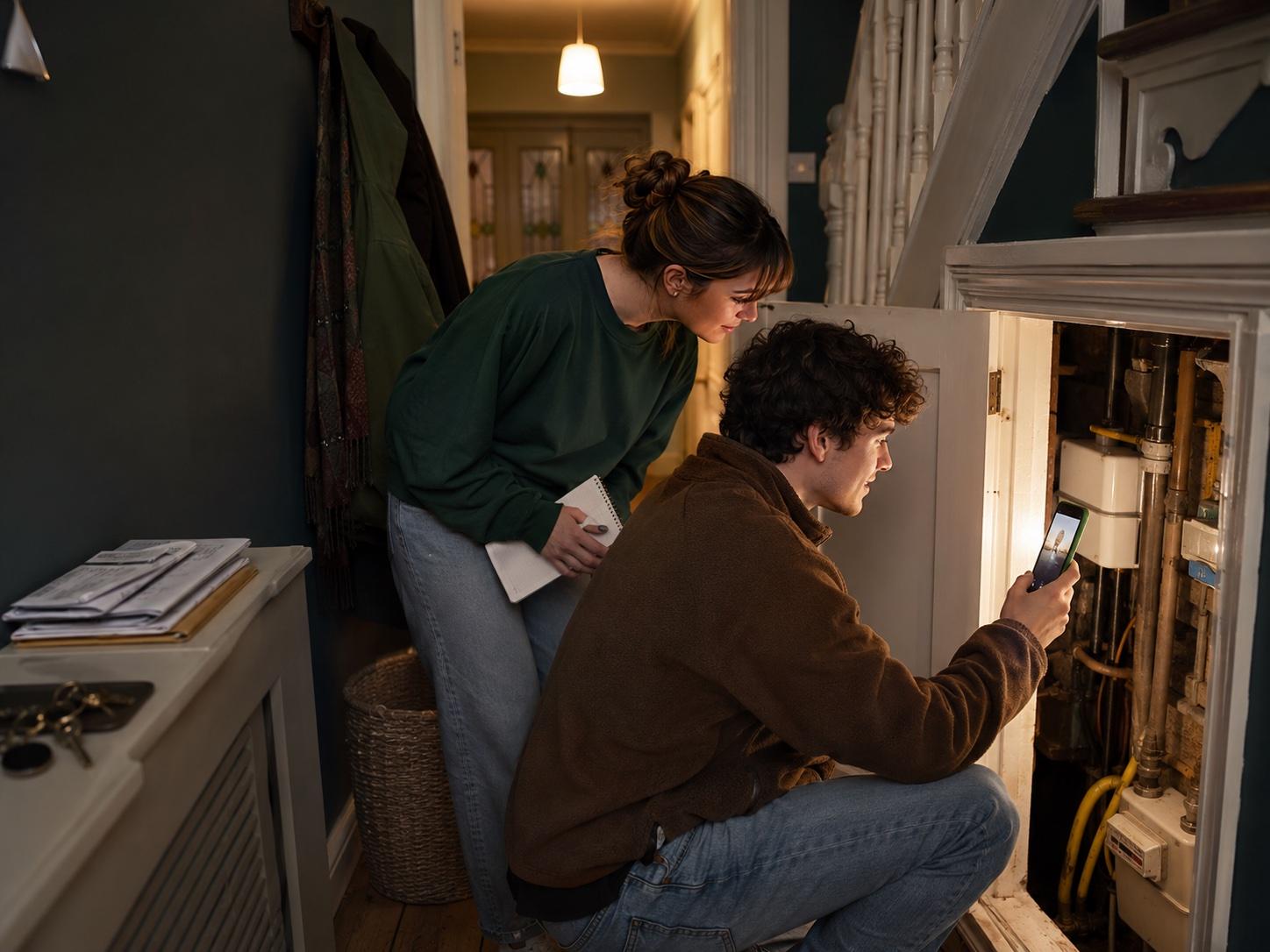
Moving Into a Student House in September? The Price Cap Changes on 1 October article image

Quick answer

If your student house pays the energy supplier directly, moving in during September puts you on the existing supplier's default tariff, which is covered by the price cap but is usually among the supplier's most expensive. The cap rises on 1 October 2026 to £1,935 a year on the like-for-like basis (£1,723 on Ofgem's current basis), with gas unit rates up 8.7% and electricity almost flat. Take gas and electricity readings on 30 September or 1 October so your first bill splits the two rate periods on real readings rather than an estimate.

Most student houses are handed over in September. The energy price cap changes on 1 October. That gap is about three weeks wide, and almost every student house in the country will move in on one set of rates and pay the next.

This is not a problem to panic about. It is a problem to take one meter reading about.

If your tenancy started in September and your household pays the energy supplier directly, your first bill will cover two different price periods. A reading taken on 30 September is what makes the split between them accurate instead of estimated.

What actually happens when you move into a student house

Nobody signs your house up to anything. The energy keeps flowing from the day your tenancy starts, and whichever supplier already serves the property bills you on their most basic terms until somebody chooses otherwise.

Ofgem calls that a default tariff, and describes the most common form of it as a deemed tariff that is standard variable. Two consequences follow, and they pull in opposite directions.

The good news: standard variable tariffs are exactly what the price cap covers. Your house is protected by the cap without doing anything at all.

The bad news: Ofgem also states that deemed contracts and default tariffs are usually among a supplier's most expensive. The cap is a ceiling on what you can be charged, not a discount. Nobody put your house on a good deal. They put it on the legal maximum for the tariff you did not choose.

There is normally no exit fee on a default tariff, because a standard variable tariff has no fixed term. So the expensive default is not a trap. It is just what you stay on if nobody in the house does anything.

This applies to any move, not just a student one. We cover the general rule, including what the cap does and does not protect, in does the energy price cap apply when you move in?.

What changes on 1 October 2026

Ofgem confirmed the October figures on 26 August 2026. Our full breakdown is in the October 2026 price cap post; here is the part that matters to a shared house.

Jul-Sep 2026From 1 Oct 2026Change
Electricity unit rate26.11 p/kWh26.32 p/kWh+0.8%
Electricity standing charge57.19 p/day54.83 p/daydown 2.36p
Gas unit rate7.33 p/kWh7.97 p/kWh+8.7%
Gas standing charge29.04 p/day29.68 p/day+0.64p

The headline cap goes from £1,862 to £1,935 a year on the like-for-like consumption basis we use across our cap history, a rise of 3.9%. Ofgem's own headline for the same rates is £1,723, up from £1,663, which it states as 4%. Both numbers describe the same unit rates on different assumptions about how much a typical home uses. Our UK energy price cap guide charts the full history on the like-for-like basis.

The rise is not spread evenly, and that matters for student houses specifically. Gas goes up 8.7% on the unit rate. Electricity barely moves. Most shared student houses are older terraces with gas central heating and a gas hob, which puts them squarely on the wrong side of that split. An all-electric flat sees under 1%.

The timing is unkind too. The gas increase lands on 1 October, which is roughly when a student house starts turning the heating on for the first time.

The reading you need to take on 30 September

If your first bill spans the change date, the supplier has to price the usage before 1 October at the old rates and the usage after it at the new ones.

They can do that two ways. They can use a reading you gave them, or they can estimate the split.

An estimate is not neutral. If it assumes more of your usage fell after 1 October than really did, you pay the higher gas rate on energy you actually burned in September. It is not a large sum on its own, but it is entirely avoidable and it sets the pattern for every future bill.

So:

  1. Take a gas and electricity reading on 30 September or 1 October, as close to the changeover as you can manage.
  2. Photograph the meters so the reading and the date are both evidenced.
  3. Send the readings to the supplier and ask them to use them for the cap changeover.
  4. Put the photos somewhere the whole house can see, not just on one person's phone.

Do the same thing on the day your tenancy started, if nobody did it then. An opening reading is what separates your household's usage from the previous tenants'. Without one, your first bill may start from the wrong number entirely, which is a bigger problem than the cap split.

Standing charges are the bit students consistently underestimate

Unit rates only charge you for energy you use. Standing charges do not. They accrue every single day, whether the house is full, empty, or locked up for a month.

From 1 October the capped standing charges for a direct debit dual-fuel home come to 84.51p a day: 54.83p for electricity and 29.68p for gas. That is:

  • about £25.71 a month before anyone uses a single kWh
  • about £308.46 over a full year
  • roughly £77 per person per year in a four-bedroom house

That bill keeps running over the Christmas break, over Easter, and through any month the house is empty. A twelve-month tenancy pays twelve months of standing charges regardless of how many of those months anyone actually lived there.

One small piece of good news: the electricity standing charge actually falls in October, so total annual standing charges drop by about £6.28 compared with the July rates. It is the gas unit rate doing the damage, not the daily charges.

How to split a bill that covers two different rate periods

This is where shared houses tend to argue, and it is worth settling before the bill arrives rather than after.

If everyone moved in on the same day and everyone is staying for the whole tenancy, it does not matter. The bill covers two rate periods, but it covers the same set of people throughout, so an equal split is still an equal split. Divide the total by the number of housemates and move on.

It only gets complicated when the household changed. If somebody moved in late, moved out early, or the house was partly empty for one of the periods, then splitting the whole bill equally quietly moves money between people.

In that case, split each rate period separately:

  1. Work out the cost of the usage before 1 October, and divide it between whoever was responsible during that period.
  2. Do the same for the usage from 1 October onwards.
  3. Add each person's two shares together.

That is the fair version, and it is only possible if you took the reading. Without a reading on the changeover date you cannot separate the periods, which means you cannot do a fair split even if everyone wants one.

Taupia does this part for you. Add the house, set the split rule once, and each bill is divided and tracked against the people actually responsible for it, with a record of who has paid. Our per-person split calculator gives you the same number manually if you would rather work it out yourself first.

If your house is bills-included, the cap does not protect you

This is the part that surprises people, and it applies to a large share of the student market.

If energy is included in your rent, or you are on an all-in-one student bills package, you do not hold the supply contract. What you pay is set by your agreement, not by Ofgem.

Ofgem's maximum resale price rules stop a landlord charging more than they paid when they recharge energy to tenants separately. But those rules do not apply where energy is included in the rent. An all-inclusive rent is a rent. It is not a regulated energy charge, and the price cap sets no ceiling on it.

So if you are on a bills-included package, the number to read closely is not the cap. It is the fair usage limit in your agreement, and what happens when the household goes past it. That is the clause that decides whether October's gas increase reaches you, and how.

We compare the two models properly in our guide to student bill packages versus splitting yourself.

What to do, by date

WhenWhat to do
NowCheck the tenancy: are bills included, and who holds the supply contract?
NowFind out who supplies the property, and confirm which tariff the house is on
NowSend opening readings from your tenancy start date if nobody did
Before 1 OctCompare fixed deals against the new capped rates on your own usage
30 Sep or 1 OctTake gas and electricity readings and send them to the supplier
From 1 OctCheck the first bill splits the two rate periods at your readings
25 NovOfgem announces the January to March 2027 cap, usually the year's most expensive quarter

Should a student house fix instead?

Possibly, but do not decide on the headline figures.

The cap figure describes a typical household. A six-bedroom terrace with the heating on is not a typical household, and neither is a well-insulated two-bed flat. What decides whether a fixed deal beats the cap is your own annual kWh, not Ofgem's average one.

The practical difficulty in September is that a brand new tenancy has no usage history to compare on. That is a real argument for staying on the capped default for a billing period, gathering a genuine usage figure, then comparing. The cost of that patience is that you spend those weeks on one of the supplier's more expensive tariffs.

Two things make the wait safer:

  • There is normally no exit fee on a default tariff, so you can leave whenever the comparison makes sense.
  • Switching takes up to five working days under Ofgem's faster switching standard, so a decision made late still lands quickly.

One thing to check on any fixed quote for a tenancy: whether the contract runs past the end of your tenancy, and what happens if it does. A 24-month fix on a 12-month student let is a problem for the person whose name is on the account.

The VAT cut lands the same day

VAT on domestic electricity drops from 5% to 0% on 1 October 2026, the same day the new cap starts, and runs until 31 March 2027.

That reduction is already inside the £1,935 figure. Ofgem states the cap would have been around £45 higher without it, so do not subtract it again.

It is worth knowing about for one reason though: the VAT cut applies to the electricity you buy regardless of tariff. It reaches fixed-tariff households and it reaches all-electric houses, both of which a cap change does nothing for. We cover it in detail in the electricity VAT cut guide.

The short version

Your student house is almost certainly on a capped default tariff that nobody chose, which is protected from the worst prices and is still probably one of the most expensive tariffs available. The cap changes on 1 October, gas takes almost all of the increase, and the single action worth taking is a meter reading on the changeover date so your first bill splits the two periods honestly.

Everything else can wait until you have a real bill to compare against. That one reading cannot.

Key takeaways

  • A student house that has not chosen a tariff is on the supplier's default, which the price cap covers but which Ofgem states is usually among the most expensive tariffs available.
  • The cap rises to £1,935 a year on the like-for-like basis from 1 October 2026, or £1,723 on Ofgem's current basis.
  • Gas takes almost all of the increase at 8.7% on the unit rate, and most shared student houses are gas-heated.
  • A meter reading on 30 September or 1 October is what makes your first bill split the two rate periods on real numbers rather than an estimate.
  • Standing charges run at 84.51p a day from October, roughly £308 a year for the house, and they accrue over Christmas and Easter whether anyone is home or not.
  • If bills are included in your rent, the price cap does not govern what you pay. Read the fair usage limit in the agreement instead.
  • Default tariffs normally carry no exit fee, so comparing later costs the household nothing but time on an expensive tariff.

Frequently asked questions

Does the energy price cap apply to a student house?

If the tenants hold the supply contract and pay the supplier directly, yes. Moving in without choosing a tariff places the household on the existing supplier's default tariff, which Ofgem describes as most commonly a deemed tariff that is standard variable, and the price cap covers standard variable tariffs. If energy is included in your rent, the cap does not govern what you pay because you do not hold the supply contract.

We moved in during September. Which rates does our first bill use?

Both. Usage before 1 October 2026 is priced at the July to September capped rates and usage from 1 October at the new ones. That is correct behaviour rather than a billing error. The supplier either uses a meter reading you provide for the changeover date or estimates the split, and an estimate that assumes too much usage fell after 1 October costs you money on the higher gas rate.

What meter reading do we need to take, and when?

Take gas and electricity readings on 30 September or 1 October, as close to the changeover as you can manage, photograph the meters so the reading and date are evidenced, and send them to the supplier asking them to use them for the cap change. Also send opening readings from your tenancy start date if nobody took them, because those separate your household's usage from the previous tenants'.

How much does the October 2026 cap change affect a student house?

It depends on your heating. The gas unit rate rises from 7.33 to 7.97 p/kWh, about 8.7%, while the electricity unit rate moves only 0.8% from 26.11 to 26.32 p/kWh. Most shared student houses are older properties with gas central heating, which puts them on the higher side of that split. Ofgem states gas bills rise around 8% overall while homes with no gas see under 1%.

How do we split a bill that covers two different price periods?

If the same housemates were responsible for the whole billing period, an equal split of the total still works, because the rate change affects everyone identically. Split the periods separately only if the household changed, for example someone moved in late or moved out early. In that case work out the cost of usage before 1 October and divide it among whoever was responsible then, do the same from 1 October, and add each person's two shares. That fair split is only possible if you took the changeover reading.

Are student houses on the price cap if bills are included in the rent?

No, not in terms of what you pay. If energy is included in your rent you do not hold the supply contract, so your cost is set by the tenancy agreement rather than by Ofgem. Ofgem's maximum resale price rules stop a landlord charging more than they paid when they recharge energy separately, but those rules do not apply where energy is included in the rent. For bills-included households the fair usage limit in the agreement matters far more than the cap.

How much are standing charges for a student house?

From 1 October 2026 the capped dual-fuel standing charges for a direct debit household total 84.51p a day, made up of 54.83p for electricity and 29.68p for gas. That is about £25.71 a month or £308.46 a year before any energy is used, which works out at roughly £77 per person per year in a four-bedroom house. Standing charges continue over Christmas and Easter breaks whether the house is occupied or not.

Should a student house fix its energy tariff before 1 October?

Only if you can compare on your own usage rather than on the headline cap figure, which describes a typical household and not a six-bedroom terrace. A brand new tenancy usually has no usage history, which is a reasonable argument for staying on the capped default for one billing period first. There is normally no exit fee on a default tariff and switching takes up to five working days, so waiting keeps your options open. If you do fix, check whether the contract runs past the end of your tenancy.

Is there an exit fee if we switch after moving into a student house?

Normally not. Ofgem defines a standard variable tariff as a supply contract of indefinite length with no fixed term in its terms and conditions, and without a fixed term there is no early termination fee. Confirm it with the supplier first, but the usual position is that a household can leave a default tariff freely.

Sources